
The journal
Is tire tread measured in 32nds?
US tread-depth readings commonly use 32nds of an inch. Learn the units, verify a gauge reading and separate a common replacement benchmark from local and seasonal requirements.
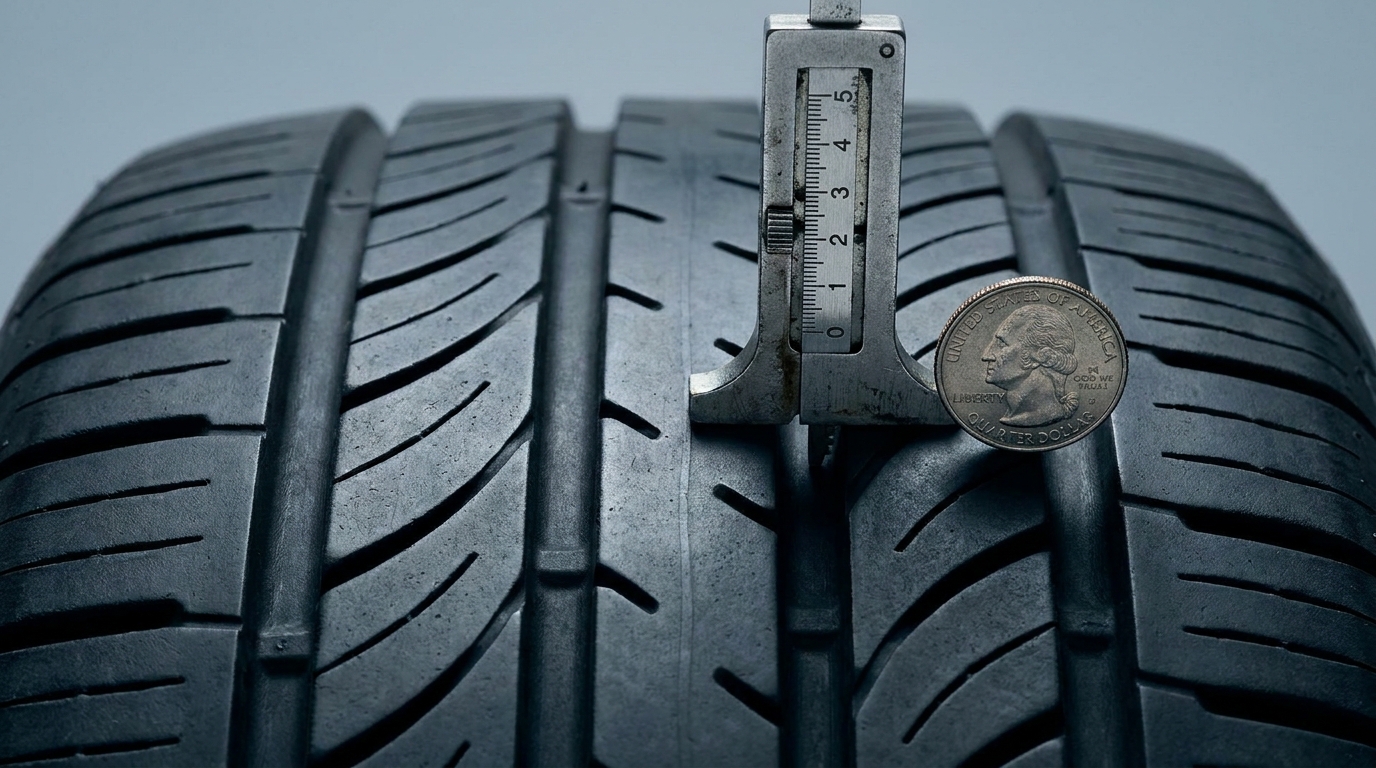
Yes. In the U.S., tire tread depth is commonly measured in 32nds of an inch. A common US replacement benchmark is 2/32 inch (about 1.6 mm), indicated by the main wear bars on many passenger tires. Check the tire, vehicle and applicable local requirements rather than treating one number as every jurisdiction’s legal rule (Michelin: Tire tread depth; Michelin: Routine tire care).
What “32nds” means
A tire tread depth gauge and many shop procedures in the U.S. use 32nds of an inch as a convenient small unit for tread depth. Treat a tire at the applicable replacement point as needing attention; a depth reading alone does not establish safe grip in every condition. Those small horizontal bars you can see inside the main grooves are the wear indicators, and when the surrounding tread wears flush with them, you’ve hit 2/32 (Michelin: Tire tread depth).
For example, 8/32 inch is 1/4 inch, or 6.35 mm. A 2/32-inch reading is 0.0625 inch, or 1.5875 mm. Read the actual gauge’s units: a millimetre scale is not a 32nds scale.
How to measure tire tread depth at home
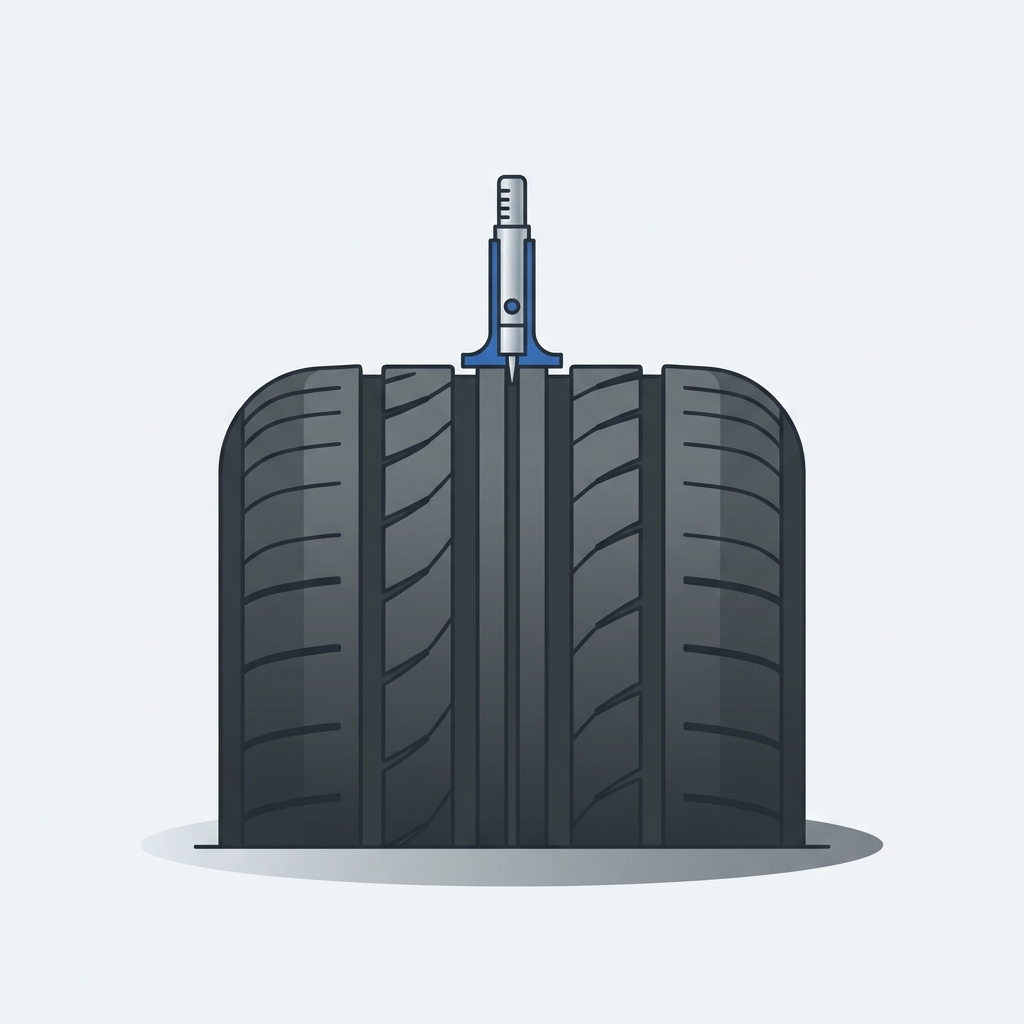
- Use a tread depth gauge for a precise reading. Park on level ground and set the parking brake. Insert the gauge’s probe into a main tread groove and press the base flat to the tread. Read the value, then repeat across the width (inner, center, outer) and around the tire. Depth can vary with uneven wear (Michelin: Tire tread depth).
- Check the wear bars. Look across the main grooves for the molded indicator bars. If the tread surface is level with those bars anywhere, the tire is at the 2/32-inch limit and needs replacing (Michelin: Visual inspection).
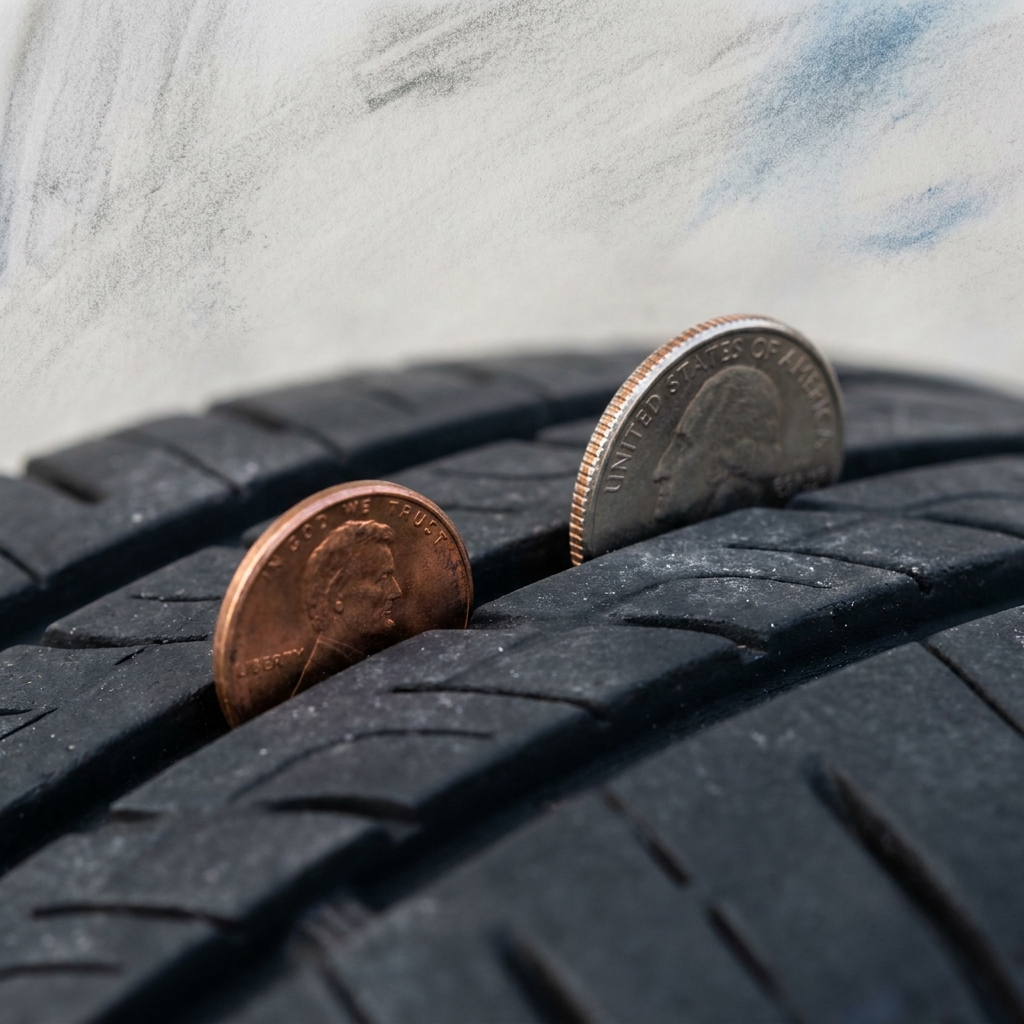
- Use the penny test if you don’t have a gauge. Place a U.S. penny into a groove with Lincoln’s head pointing down. If you can see the top of Lincoln’s head, the result suggests very shallow tread; confirm it with a gauge and inspection and the tire should be replaced (Michelin: Routine tire care).
When to replace: minimum vs. practical
Michelin uses 2/32 inch as a replacement point in this US guidance; local, vehicle and seasonal requirements can differ. However, wet-condition performance also depends on tire design, wear and conditions, so a legal minimum is not a promise of unchanged performance. If you regularly drive in heavy rain, discuss the tire maker’s wet-weather recommendations and actual condition with a suitable tire service (Michelin: Tire tread depth).
Uneven readings? What that suggests
- Edges worn more than the center: can be associated with underinflation, among other causes.
- Center worn more than the edges: can be associated with overinflation, among other causes.
- One shoulder worn: can suggest alignment or another mechanical issue.
Uneven wear is a signal to check pressure, alignment, balance or suspension. Have the cause assessed as part of the repair or replacement plan; do not keep driving on an unsafe tire while waiting to avoid repeating the pattern (Michelin: Tread problems; Michelin: Tire tread depth).
Put this into practice
Record the measurement units and location on each tyre before comparing depths. Keep the measurement separate from replacement rules, which depend on the vehicle, tyre, season and applicable requirements.
Quick tread depth check you can do today
Related reading on Driven & Kept
FAQ
Do I need a special tool to measure in 32nds?
No. A simple tread depth gauge is inexpensive and easy to use. If you don’t have one, the built-in wear bars and the penny test still provide a rough indication; they do not measure every groove precisely (Michelin: Routine tire care).
Where exactly should I place the gauge or penny?
Measure in a main tread groove, away from any molded hump or decorative feature. Take readings across the width and around the tire to catch uneven wear (Michelin: Tire tread depth).

Optional equipment for this guide
A tread gauge can help you record the existing tyres consistently. It cannot decide whether one replacement is compatible with the vehicle or remaining tyres.
As an Amazon Associate I earn from qualifying purchases. These are researched options, not hands-on test results. Check the exact size or model, current price and availability on Amazon.
| Product option | Fit and limits to check | Retailer |
|---|---|---|
| Product imageMilton S-448 tread-depth gauge | A depth-measurement tool, not a tyre replacement rule. Check its scale and technique, then use the exact vehicle, tyre and local requirements for decisions. | View on Amazon |