
The journal
Digital or analog tire pressure gauge: which is better?
Digital and analog gauges can both be suitable. Compare readability, range, specification and a proper reference check, then use the vehicle’s actual cold-pressure instructions.
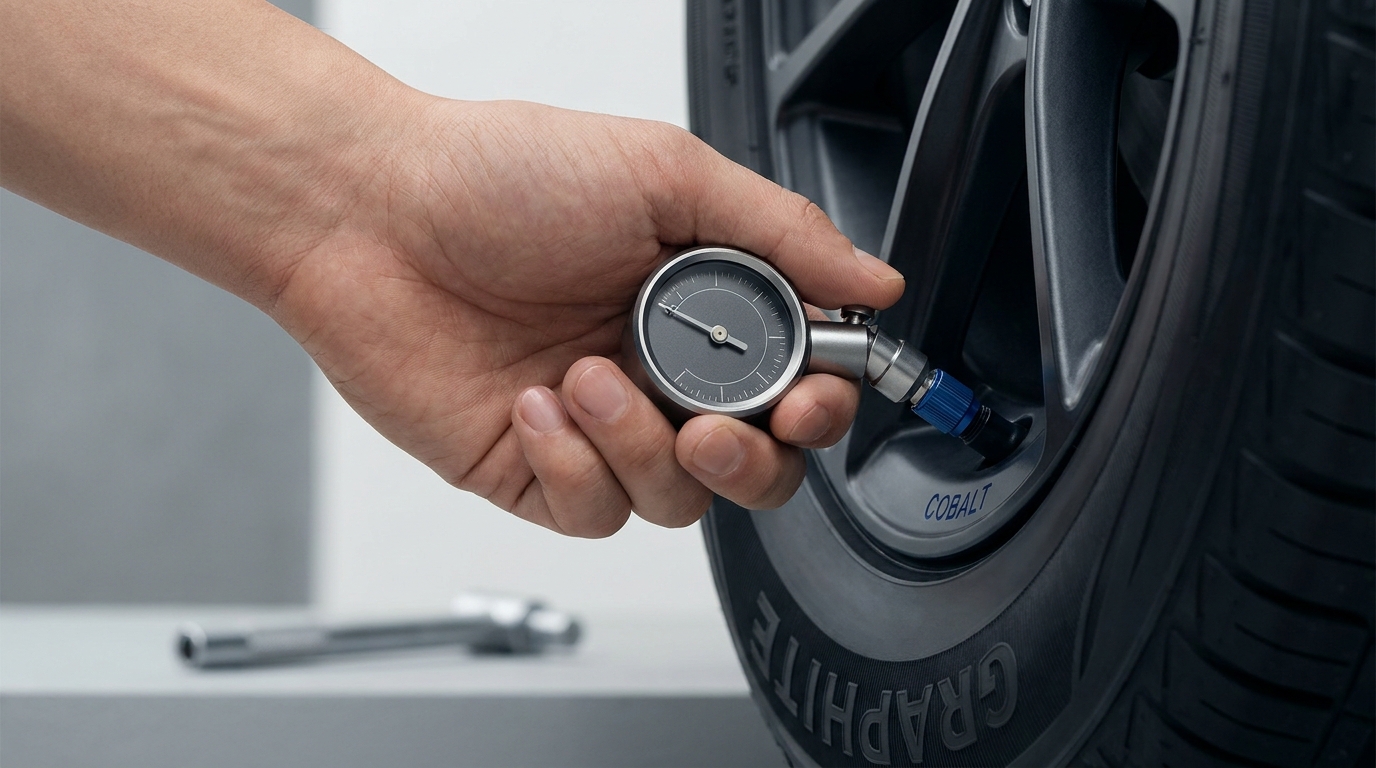
Neither is automatically better. The best tire pressure gauge is the one you keep calibrated and can read consistently, whether it’s digital, dial, or pencil style. Tire makers emphasize using your own reliable gauge and not relying on gas station pump gauges, which are often not calibrated, and checking pressures monthly when tires are cold (Michelin: How to check tire pressure; Michelin: How to Properly Inflate Your Car Tires; Michelin: Routine tire care tips).
Accuracy and calibration matter more than display type
Both digital and analog gauges can be accurate. What matters is calibration and how you use the tool. Guidance from tire manufacturers focuses on:
- Use your own dependable, calibrated gauge; do not rely on gas station pump gauges because they’re not always accurate (Michelin: How to Properly Inflate Your Car Tires).
- Check pressures monthly and before long trips, ideally when tires are cold, because heat from driving raises readings (Michelin: How to check tire pressure; Michelin: Routine tire care tips).
- For final adjustment, use the vehicle maker’s cold-pressure instructions. Do not apply a generic warm-pressure offset from another vehicle or procedure (Michelin: Routine tire care tips; Michelin: How to Properly Inflate Your Car Tires).
Choosing between digital and analog in practice
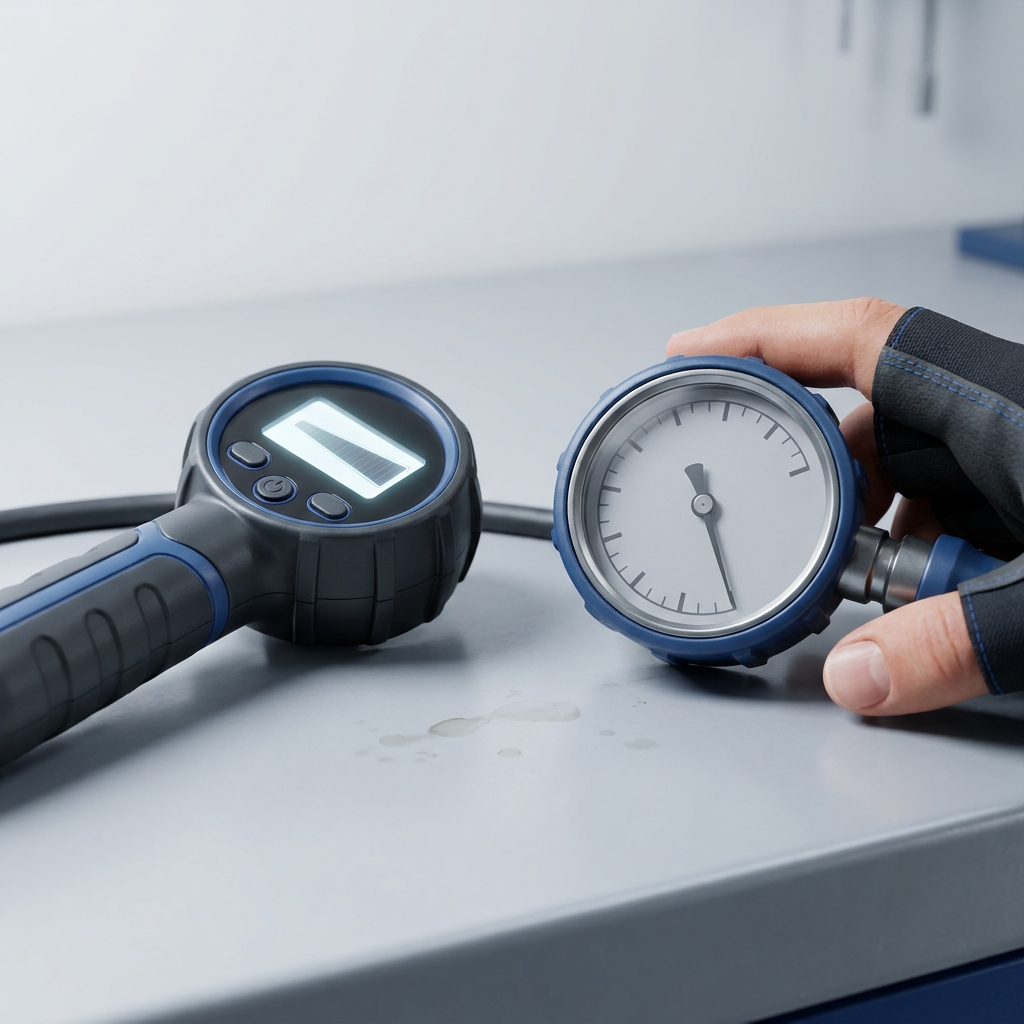
Pick the gauge you can read accurately every time. A clear, stable reading helps you hit the vehicle’s specified cold pressure on the door placard. Digital gauges present a direct number; pencil and dial gauges use a scale and pointer. Tire maker guidance notes that either format works when used correctly, including the common digital and pencil styles (Michelin: How to check tire pressure).
If you’re unsure which you’ll read most consistently, test both on the same tire when cold and see which gives you repeatable readings and confidence. Repeatable readings alone do not prove accuracy. Compare with a suitable calibrated reference rather than choosing whichever display you prefer as the standard.
How to verify your gauge is reading correctly
Because calibration drifts and pump gauges vary, build a quick cross-check into your routine:
- Use your gauge on a cold tire at home.
- At your next visit, ask a tire professional to read the same tire with a shop-calibrated gauge, then compare. Manufacturers specifically suggest having pressure checked occasionally by a professional or using a calibrated gauge (Michelin: How to Properly Inflate Your Car Tires; Michelin: Routine tire care tips).
- If your gauge is consistently off by a similar amount, have the gauge checked, serviced or replaced; do not assume the same correction applies at every pressure. If readings vary randomly, replace the gauge.
Using your gauge the right way (this protects accuracy)
Even a well-calibrated gauge gives poor results if used incorrectly. Follow these points from tire maker instructions:
- Check when tires are cold: parked for at least 2-3 hours or driven less than a couple of miles at low speed (Michelin: How to Properly Inflate Your Car Tires).
- Press the gauge squarely on the valve and read promptly. Avoid a leaking connection; repeated or prolonged air loss can change the pressure you are trying to compare (Michelin: How to check tire pressure).
- Adjust to the vehicle placard number, not the tire sidewall maximum (Michelin: How to Properly Inflate Your Car Tires).
- If the tire is warm, follow the vehicle maker’s procedure and recheck cold; do not use an automatic 4-5 psi correction (Michelin: Routine tire care tips).
- Reinstall valve caps; they help keep the valve clean and sealed (Michelin: How to Properly Inflate Your Car Tires).
Bottom line
Choose the format you read best, keep it calibrated, and use it on cold tires. That’s what keeps your pressures on spec. If you need a refresher on cold-check steps, see our quick guide: How to check car tire pressure: simple cold-check steps.
Put this into practice
List the required pressure range, units and access to your vehicle’s valves before comparing formats. Treat readability and accuracy as separate questions, and use the vehicle’s specified pressure rather than the gauge’s maximum scale.
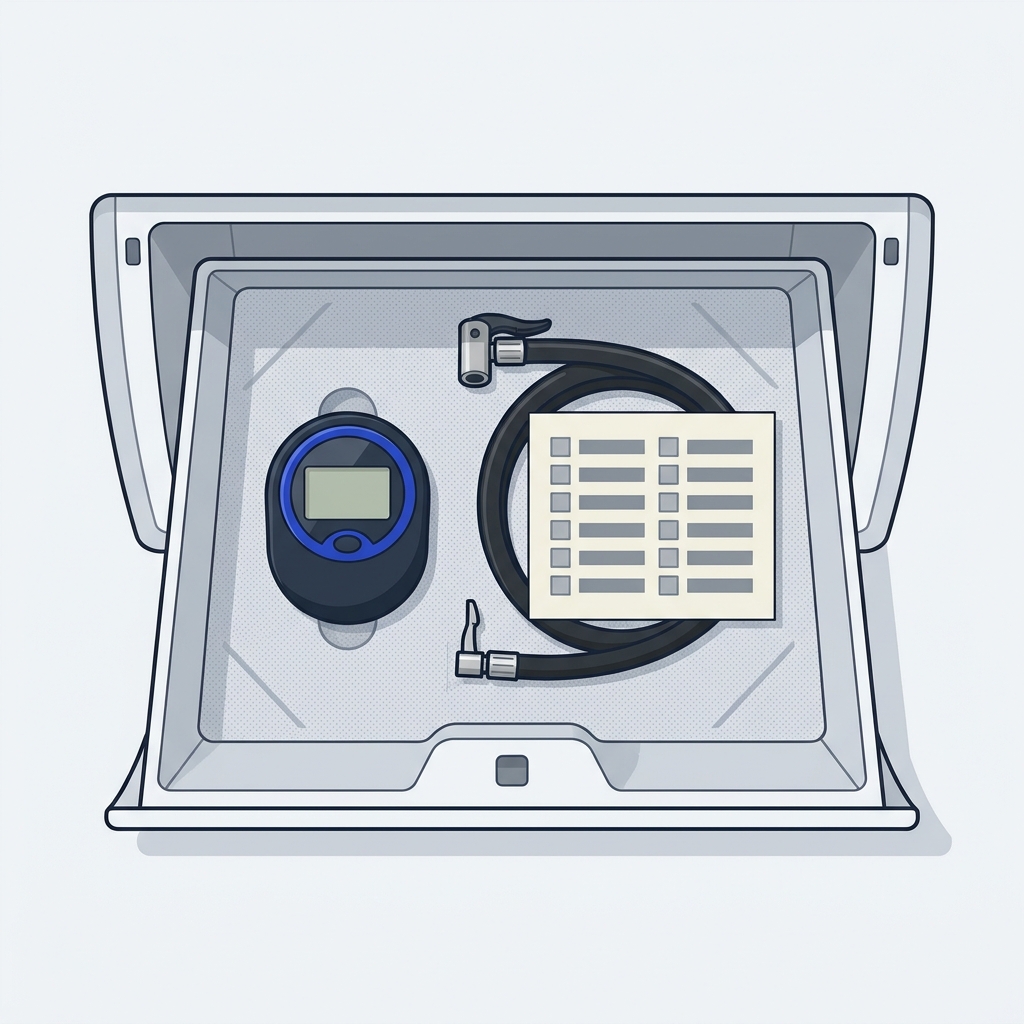
Quick gauge-check routine before a trip
Short FAQ
Does TPMS make a handheld gauge unnecessary?
No. Tire makers advise checking monthly with a gauge and not waiting for the TPMS light; by the time it turns on, pressure has already dropped significantly (Michelin: Tire Pressure Guide).
Are gas station air pump gauges accurate?
Not reliably. Built-in pump gauges are not always calibrated. Inflate with the station’s air, then verify and fine-tune using your own calibrated gauge (Michelin: How to Properly Inflate Your Car Tires).
Related reading: Is it okay to drive with the TPMS light on?

Optional equipment for this guide
These illustrate dial and digital formats, not a tested accuracy ranking. Choose range, readability and valve access, then follow the comparison method in the guide.
As an Amazon Associate I earn from qualifying purchases. These are researched options, not hands-on test results. Check the exact size or model, current price and availability on Amazon.
| Product option | Fit and limits to check | Retailer |
|---|---|---|
| Product imageJACO ElitePro dial tyre-pressure gauge, 60 PSI | Choose a gauge with a suitable range and valve access for the vehicle. This option is not an independent calibration reference or proof that another gauge is wrong. | View on Amazon |
| Product imageJACO ElitePro digital tyre-pressure gauge, 100 PSI | A digital-readout option to compare with a dial gauge. Check range, units, battery and valve access; displayed precision is not proof of measurement accuracy. | View on Amazon |