
The journal
How can I decode the DOT tire code?
Decode the complete DOT tire identification number, read week/year date digits, and distinguish current three-symbol plant codes from older formats.
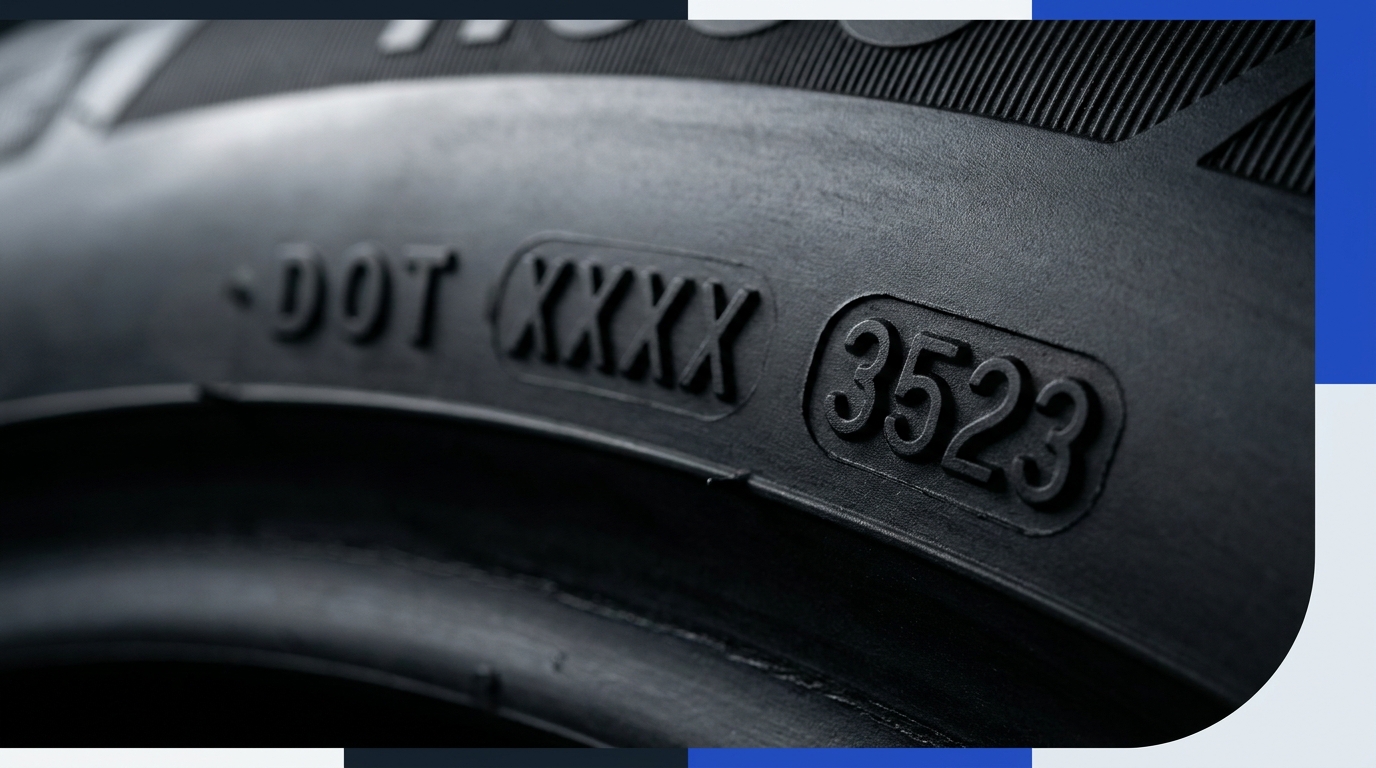
Find the complete tire identification number, or TIN, beside the DOT marking on the sidewall. For tires manufactured from 2000 onward, its last four digits give the manufacturing week and year: 2524 means week 25 of 2024. This is a production date, not a month, installation date or promise of remaining service life.
Find the full number before decoding it
A sidewall can carry a partial identification number without the date group. If the visible marking has no four-digit date at the end, do not choose another nearby number at random. The complete TIN may be on the other sidewall. Check from a safe position with the vehicle parked; if access is difficult, ask a tire professional rather than crawling under an unsupported vehicle.
Nokian Tyres’ date-code guide shows why the final group matters. Record the complete marking when asking about the tire, and keep the size, model and other sidewall information separate. A size such as a width/aspect-ratio/rim-diameter code is not the date.
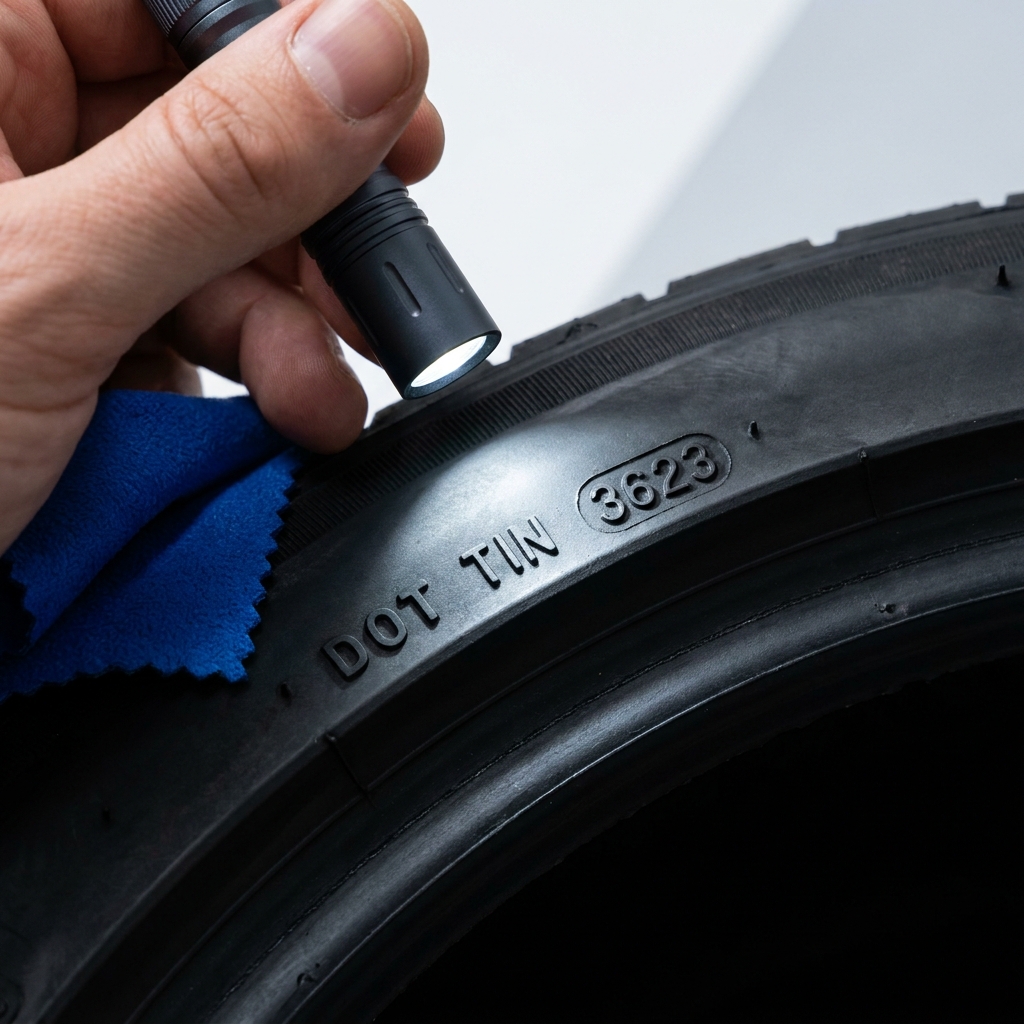
Why the plant code is not always two characters
The current US rule for new pneumatic tires specifies a 13-symbol TIN excluding the DOT letters: three symbols for the plant, six manufacturer symbols and four date digits. Earlier formats with a two-symbol plant code remained permitted during a transition ending in April 2025. Consequently, older and newer tires need not have identical-looking identification strings.
The exact requirements are in 49 CFR 574.5. Do not apply a two-character plant lookup to every modern tire or assume the middle characters form a publicly readable specification. Ask the manufacturer about a full identification number if its meaning is unclear. Retread identification also has its own rules.
Read a date example correctly
Suppose the date group is 4714. It identifies week 47 of 2014, not April 2014 and not the day the tire was sold. This is an illustrative date group, not a fabricated complete tire serial number. The federal rule defines its manufacturing-week convention; there is no need to convert it into a guessed calendar day.
A confirmed complete pre-2000 tire date uses three digits and does not identify the decade in the same way. A tire that old needs replacement advice, not a favorable interpretation based on tread appearance. A partial modern code should not be mistaken for a complete legacy date.
Use age alongside the other replacement checks
Check the vehicle and tire makers’ age limits and inspection requirements, even when tread looks deep. Also consider damage, irregular wear, pressure loss and service history. A date alone cannot establish roadworthiness, and the DOT mark is not an ongoing inspection certificate.
For a recall or service inquiry, provide the complete TIN and the tire model rather than only the last four digits. That lets the manufacturer distinguish the affected production details. If the marking is damaged or unreadable, have the tire identified professionally instead of guessing.
Record a DOT tire code accurately
